A sectional sofa is one of the smartest investments you can make for a living room. Unlike a traditional sofa, a living room furniture sectional wraps around your space, seats more people, and adapts to different layouts, whether you’ve got a sprawling family room or a cozy apartment. In 2026, sectionals dominate design conversations because they balance form and function beautifully. This guide walks you through selecting the right sectional for your home, measuring correctly, and styling it to complement your decor.
Table of Contents
ToggleKey Takeaways
- A living room furniture sectional maximizes seating efficiency by wrapping around corner space and comfortably accommodating 4–8 people depending on configuration.
- L-shaped sectionals suit most rooms and suit corner or floating layouts, while U-shaped sectionals work best in larger spaces with 18+ feet of unobstructed room.
- Measure your room’s dimensions carefully, verify doorway widths (36 inches standard), and account for walkways of 18–24 inches to prevent a cramped layout.
- Choose performance fabrics like microfiber or solution-dyed options for families with kids and pets, as they resist stains and offer superior durability compared to natural fibers.
- Style your sectional with 3–5 throw pillows per side, layered textures, a neutral or jewel-tone color palette, and complementary furniture to create a cohesive, inviting living room.
- Anchor your sectional with an 8×10 or larger area rug and use layered lighting (overhead, floor lamps, and table lamps) to enhance both functionality and ambiance.
Why Sectionals Are Perfect for Modern Living Rooms
Sectionals solve real problems that standard sofas can’t. First, they maximize seating in a defined footprint. A sectional occupies corner space efficiently, using wall real estate that might otherwise sit empty. Second, they create natural conversation areas, people naturally face each other when seated on an L-shape, fostering connection without cramming everyone onto one long sofa.
They’re also modular by nature. A sectional doesn’t demand a specific room layout: you can arrange the pieces to suit your TV placement, windows, or traffic flow. If you move, the sectional adapts. Young families appreciate this flexibility as kids grow and entertaining needs shift.
Durability is another win. Quality sectionals distribute weight across multiple seating surfaces, meaning no single spot bears constant stress. This extends lifespan compared to traditional sofas where one side absorbs most wear. When considering materials and upholstery choices, sectionals offer robust options built to handle daily living, pets, kids, and the occasional spilled drink.
Sectional Styles and Configurations to Match Your Space
L-Shaped vs. U-Shaped Sectionals
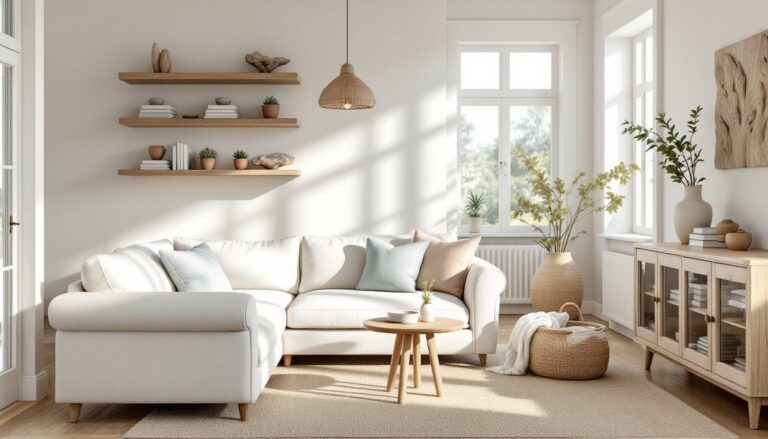
L-shaped sectionals are the workhorses of living room design. They’re named for their shape: a long sofa arm perpendicular to a shorter chaise or return. Most rooms can accommodate an L-shape without feeling cramped. The configuration seats 4–6 people comfortably and suits corner placement or floating layouts. An L-shape works especially well if your room has an obvious focal point, a TV, fireplace, or window, because both sides naturally angle toward it.
U-shaped sectionals wrap three sides, creating an enclosed seating pit. They’re best for larger rooms (ideally 18+ feet in one direction) and households that entertain frequently. Expect to seat 6–8 people. The downside? U-shapes demand more floor space and look awkward in smaller rooms or narrow rectangles. Install a U-shape only if your layout has breathing room on all sides.
Modular and Convertible Options
Modular sectionals break into individual pieces, cubes, ottomans, chaises, that you mix and match. This approach shines for renters or people who rearrange often. You’re not locked into one configuration. Many modular systems let you add or remove pieces as life changes. The trade-off: modular pieces tend to cost more per seating position than a fixed sectional, and seams between cushions are more visible.
Convertible sectionals pull double duty: some recline, others convert into sleepers for guests. If you’re tight on square footage and need occasional guest sleeping space, a convertible sectional saves you from buying a separate bed. Just know that mechanism quality varies wildly. Cheaper conversions jam or sag within a year: higher-end versions (think mid-range to luxury brands) operate smoothly and last. Test the mechanism in person before buying. Style guides and interior design tips often highlight modular and convertible pieces for flexible, evolving spaces.
How to Measure and Fit a Sectional in Your Living Room
Measuring wrong is the #1 reason sectional purchases fail. Start by mapping your room’s floor plan on graph paper (1 square = 1 foot works well). Mark doorways, windows, and structural obstacles like radiators or built-ins. Then measure your space ruthlessly.
For an L-shaped sectional, you need to know the length of both arms. Let’s say your room is 14 feet wide and 16 feet deep. If you place the sectional in the corner, the longer arm extends 10–12 feet along one wall and the chaise takes up 6–8 feet along the perpendicular wall. Leave at least 18–24 inches of walkway from the sectional’s tip to the nearest furniture or wall. That space prevents your living room from feeling like a maze.
Measure doorways. A 36-inch standard door frame limits the width of any single piece you can carry through. Modular sectionals solve this: each cube typically fits through doorways. Fixed sectionals sometimes arrive in two pieces (left and right) that clip together, verify this during purchase.
Consider scale relative to room height. A deep, cloud-like sectional with 42-inch seat depth dominates a room with 8-foot ceilings: it’ll feel suffocating. Match cushion depth to your ceiling height: smaller rooms and lower ceilings pair better with 30–36-inch depths. Also account for chaise length. A standard chaise is 30–36 inches long, measure whether your legs fit without dangling off the edge. Options for comfortable sectional sizing include reviewing reviews of the top to understand typical dimensions across brands.
Material and Upholstery Choices for Durability and Comfort
Your fabric choice makes or breaks long-term satisfaction. Understand the options before committing.
Leather or Faux Leather: Genuine leather develops a patina and feels luxurious but requires maintenance and isn’t kid/pet-friendly without care. Spills wipe clean, but claws and rough play mark it. Faux leather (polyurethane) mimics the look, resists stains, and costs less, but it doesn’t breathe like genuine leather and can crack after a few years of heavy use. Works better for formal spaces than family rooms.
Microsuede and Microfiber: These synthetic fabrics are the sweet spot for families. Microfiber resists stains, feels soft, and handles wear well. Microsuede (a napped polyester) is silky to the touch but slightly less stain-resistant. Both vacuum easily and don’t show crumbs or dust like darker fabrics. The catch: they pill over time with friction. Better-quality microfibers resist pilling longer.
Natural Fibers (linen, cotton, wool blends): Gorgeous and breathable but stain-prone and require professional cleaning for spills. Ideal for adult-only spaces or formal living rooms. Pricing sits in the mid-to-premium range.
Performance Fabrics: Newer, solution-dyed fabrics engineered to repel liquids and resist fading. Brands like Sunbrella and Crypton make sectionals almost indestructible, perfect for pets, kids, or high-traffic living rooms. Expect higher cost (often 20–30% premium) but genuine durability. For detailed comparisons of sectional quality and materials, check out resources like reviews of 20 best.
Color matters too. Lighter fabrics show dirt but brighten spaces: darker hides mess but can feel cave-like. Consider your lifestyle honestly. Families with young kids and pets benefit from medium-tone, high-performance fabrics.
Styling Your Sectional: Colors, Textures, and Accessories
A sectional is the anchor of your living room design. Style it thoughtfully to tie everything together.
Color Strategy: Neutral sectionals (gray, beige, navy) are blank canvases and work with almost any decor shift. If you love color, a jewel-tone sectional (emerald, sapphire, or rust) becomes a statement piece. Remember that sectionals stay put longer than throw pillows, so choose a color you’ll live with for 5+ years. Blue living room furniture trends strong because blue reads as calming and universally appealing.
Layering Textures: Offset a smooth, tightly woven sectional with rough linen throw pillows or a chunky knit blanket draped over the arm. If your sectional has a deep texture (say, boucle or corduroy), pair it with sleek metal coffee tables or glass accents to balance visual weight. This prevents your room from feeling monotonous.
Throw Pillows and Blankets: Use 3–5 pillows per side of an L-shape, distributed asymmetrically for a lived-in look. Mix prints and solids, a striped pillow next to a solid linen next to a geometric pattern creates visual interest. Drape a throw blanket casually over one arm: it invites coziness and adds texture without formality.
Complementary Furniture: A sectional plays well with pieces that echo or contrast its style. Living room sets Ashley Furniture and similar retailers offer coordinated coffee tables, side tables, and media consoles designed to complement sectional dimensions. Keep coffee tables modest in scale, oversized tables obstruct movement and view lines. A simple white furniture living room approach pairs sectionals with light wood or white painted pieces for an airy, cohesive feel.
Rugs and Lighting: Ground your sectional with a large area rug underneath (8×10 or 9×12 minimum). Layered lighting, overhead fixture, floor lamp near the chaise, table lamps on side tables, creates ambiance and functionality. Skip overhead alone, which feels clinical in a living room.