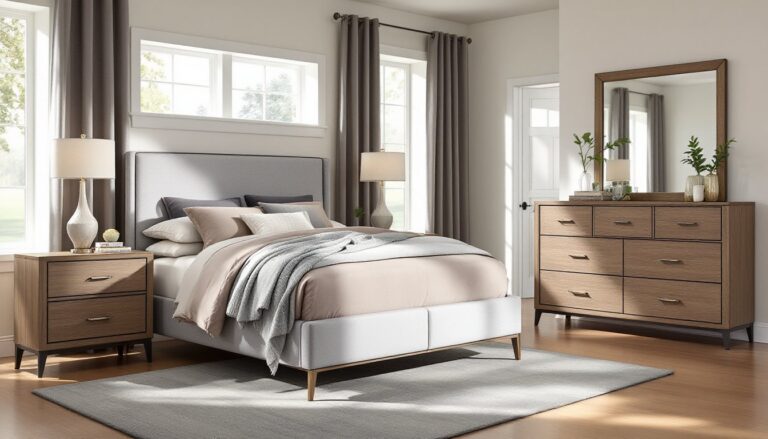
Whether you’re furnishing a guest bedroom or finally upgrading that sagging mattress and worn nightstand, bedroom furniture outlets offer a genuine path to affordability without sacrificing quality. Unlike full-price retail showrooms, outlets typically stock overstock items, previous-season styles, and manufacturer closeouts at 30–50% below standard pricing. For homeowners juggling multiple renovation projects or working with a tight budget, this difference adds up fast. The challenge isn’t finding deals, it’s knowing which pieces are worth buying and how to evaluate construction quality in person before you commit.
Table of Contents
ToggleKey Takeaways
- Bedroom furniture outlets offer 30–50% savings on overstock items and manufacturer closeouts by maintaining lower overhead and higher inventory turnover than full-price retailers.
- Evaluate bed frames and dressers by checking for mortise-and-tenon joinery, full-extension ball-bearing drawer slides, and solid wood or plywood backing rather than particleboard to ensure long-term durability.
- Measure your bedroom dimensions, doorway width, and ceiling height before shopping so your outlet furniture fits properly without surprises at home.
- Inspect floor samples and display models for structural integrity and hidden damage like water stains or odor, as these often carry the deepest discounts when cosmetically sound.
- Arrange your bedroom furniture layout with the bed as the anchor, position nightstands and dressers to maintain at least 18 inches of clearance, and prioritize traffic flow from door to closet.
- Matched bedroom furniture sets from outlets eliminate design guesswork and create visual cohesion, making them ideal for guest bedrooms and smaller spaces where balanced scale matters.
Why Bedroom Furniture Outlets Offer the Best Value
Bedroom furniture outlets exist because manufacturers and retailers need to move inventory efficiently. When a furniture line gets discontinued, when a showroom overorders, or when a shipment arrives slightly damaged in transit but remains fully functional, those pieces flow to outlet channels instead of sitting in a warehouse.
The savings are real. A solid wood bedroom set that retails for $3,500 might sell at an outlet for $1,800–$2,200. That’s not a loss leader or a bait-and-switch, it’s the outlet’s operating model. Lower overhead (smaller showrooms, minimal advertising, high inventory turnover) means they pass savings directly to you.
What you’re not getting is the showroom experience. Most outlets don’t offer the same white-glove delivery, assembly, or styling consultation as flagship stores. That trade-off works fine if you’re comfortable measuring your space yourself, arranging delivery logistics, and assembling a bed frame or dresser. The quality of the actual furniture, joinery, wood grain, hardware, remains identical to what full-price retailers sell.
Outlets also carry no-name and regional brands that don’t advertise nationally. These manufacturers make solid, honest pieces for decades without flashy marketing. Shopping an outlet is your chance to discover them.
What to Look for When Selecting Quality Bedroom Pieces
Quality bedroom furniture isn’t about the price tag or the brand name, it’s about how the piece is built, what materials go into it, and whether it’ll hold up through daily wear.
Evaluating Frame Quality and Construction
The bed frame is your foundation. Look for mortise-and-tenon joinery or dowel construction in the headboard and side rails, especially on wood frames. Mortise-and-tenon joints (where one piece is cut with a protruding tab that slots into a carved pocket) are stronger and more durable than butt joints (flat ends glued and screwed together). Run your hand along seams and feel for gaps. Tightness matters. Shake the frame side-to-side, it shouldn’t wobble or creak.
For dressers and nightstands, check the drawer slides. Full-extension ball-bearing slides are the gold standard. Pull a drawer open: it should glide smoothly and close with a soft, controlled motion, not slam or stick halfway. Budget pieces use simple wooden runners that wear and stick after a year or two. Don’t compromise here, you’ll use these drawers hundreds of times per year.
Inspect the back panel. Solid wood or plywood backing is better than thin particleboard. A cheap back panel will warp or split, throwing the whole case out of square. Look for solid wood joinery at corners, not just staples holding a thin panel in place.
Understanding Materials and Finishes
Solid wood (oak, cherry, maple, walnut) is more durable and repairable than veneered particleboard, but it costs more and requires humidity control to prevent warping. Solid hardwood is ideal for pieces you’ll keep 10+ years.
Veneer over plywood is a practical middle ground. A thin slice of real wood is glued to a plywood substrate, giving you the look of solid wood with more dimensional stability and a lower price. Quality veneer work shows seamless grain matching and no visible peeling or bubbling. Run your finger across joints and seams, they should feel flush.
Particleboard and MDF (medium-density fiberboard) are common in budget outlets. These are compressed wood fibers and resin. They’re fine for drawer sides and the interior structure of pieces, but avoid large external surfaces made entirely of particleboard, they dent easily and won’t take screws or hardware well after the first installation.
Finish quality matters. Open a drawer or door and look at the inside edges. If the finish is thick, glossy, and uniform, the manufacturer used a good spray or dip process. If finish is thin, blotchy, or only on the outside face, expect it to chip and wear faster. Matteness (satin or matte finish) hides dust and wear better than gloss, and it reads as more contemporary.
Smart Shopping Strategies for Maximum Savings
Show up with a tape measure and a critical eye. Outlets don’t always allow returns or have restocking fees, so your inspection time on the floor is your only chance to assess condition and fit.
Measure before you go. Know your bedroom dimensions, doorway width, and ceiling height. A tall dresser might not fit through your bedroom door, and a queen bed might overwhelm a small room. Bring a floor plan sketch if you have one. Don’t rely on memory, add two feet to whatever you think your space is, because it never is.
Ask about floor samples and display models. These often have the deepest discounts because they’ve been touched by dozens of customers. Inspect the visible wear. Light scratching or dust is fine: check for structural issues like broken hinges, loose hardware, or cracked mirrors. A floor sample bed frame with a few marks might be a steal if the joinery is solid.
Check for hidden damage. Look inside drawers, lift the mattress (if included), and examine the back of pieces. Water stains, dark spots, or odors signal past storage or handling issues. Skip these.
Timing matters. Furniture outlet sales and clearance events happen around major holidays (Labor Day, Black Friday, January) and season changes (end of winter, start of summer). Sign up for outlet emails to catch sales before you shop.
Bring a friend. Lifting a dresser or bed frame alone is impractical and risky. A second person lets you tilt, flip, and inspect pieces safely. They’ll also spot issues you might miss when you’re focused on assembly logistics.
Designing Your Bedroom Layout With Outlet Furniture
Once you’ve bought your pieces, layout planning keeps your room functional and visually balanced. Outlet furniture often comes in standard sizes, queen beds, six-drawer dressers, nightstands, so your design flexibility is already shaped by what’s available.
Start with the bed. It’s the anchor. In most bedrooms, the bed goes on the longest wall, centered. From there, place nightstands on either side (if the space allows), then position the dresser opposite or along an adjacent wall where it doesn’t block the bedroom door or windows. A dresser facing the foot of the bed creates a balanced view from the bedroom door.
Consider traffic flow. You should be able to walk from the door to the closet and around the bed without shuffling sideways. Keep at least 18 inches of clearance on sides of the bed for making it and reaching nightstands.
Furniture Sets that Transform often come pre-coordinated in matching wood tones and styles, which simplifies the design challenge. Mixing a walnut dresser with an oak nightstand is possible, but matching sets eliminate guesswork and create visual cohesion in a smaller room.
Lighting and scale matter too. A small bedroom needs modest-scale pieces to avoid feeling cramped. A large master bedroom can handle a tall dresser or a statement headboard. Sites like Homedit and Design Milk showcase bedroom layouts that demonstrate how furniture scale affects perceived spaciousness. If you’re designing a guest bedroom or planning a refresh, browsing 75 Bedroom Furniture Ideas offers visual inspiration for color combinations and arrangement styles.
Storage is practical design. Outlet dressers and nightstands exist to organize clothes and personal items, not just fill space. Plan your dresser depth (typically 16–18 inches) and drawer count before you buy, so you’re not cramming oversized sweaters into shallow drawers or running out of folded-shirt space.
Conclusion
Bedroom furniture outlets deliver real savings when you know what quality looks and feels like. Solid construction, durable finishes, and thoughtful joinery separate pieces you’ll enjoy for a decade from bargains that fall apart in two years. Show up prepared with measurements, inspect pieces thoroughly, and trust your instincts about build quality. The best deal is the one you don’t regret.